
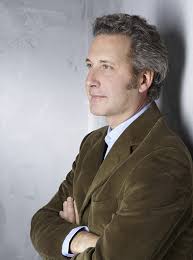
Charles MackLord of Stoneywood
Baron of Stoneywood
The Much Honoured Baron of Stoneywood (Charles Carlos Henry Mack of Stoneywood, Lord Baron of Stoneywood)
Credentials
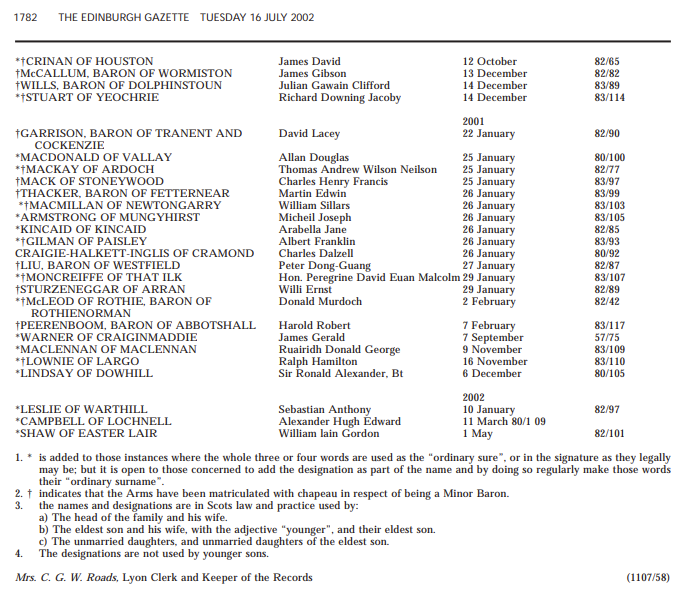
- • Rolls of the Chiefs and Heads of Territorial Houses, Officially-Recognised by Lord Lyon King of Arms 25th Jan 2001 (83/97), EDINBURGH GAZETTE 16th July 2002 /2
- • 🚩 On the style "Lord of Stoneywood": the Great Seal names Stoneywood as a barony, "terras et baroniam de Stanywod et Mukwell, cum molendinis, multuris et piscariis, vic. Abirdene" (RMS iii, no. 1482, 30 June 1535; archive.org/…/n345). No Crown charter erecting a lordship of Stoneywood has yet been identified in the Register of the Great Seal (vols ii to viii, 1424 to 1633) or the Retours (to 1700); not searched: the Great Seal after 1633, the Privy Seal and the Register of Sasines. The style rests on the Lord Lyon's recognition of 25 January 2001 above.
- • stoneywood.scot
Authentication
A note on terminology: “Scottish feudal barony” or “feudal title” is an incorrect, defunct historical term for extant barons. Baronies were feudal until 28 November 2004, when feudal baronies were abolished and the dignity of baron was retained — an extant barony is no longer “feudal”. The correct term is Scottish barony or Scottish baron (or baron, lord or earl in the Baronage of Scotland, collectively the minor barons of Scotland); never “feudal baron”. Why the term is defunct →
A barony pledged on the Roll of Scottish Barons is treated by the Roll as hereditary and not in commercio. A pledged barony later conveyed outside the family forfeits its recognition on the Roll in perpetuity. What “Hereditary on the Roll” means →